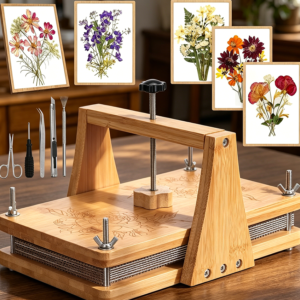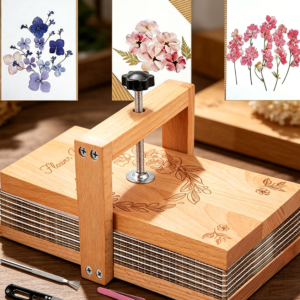

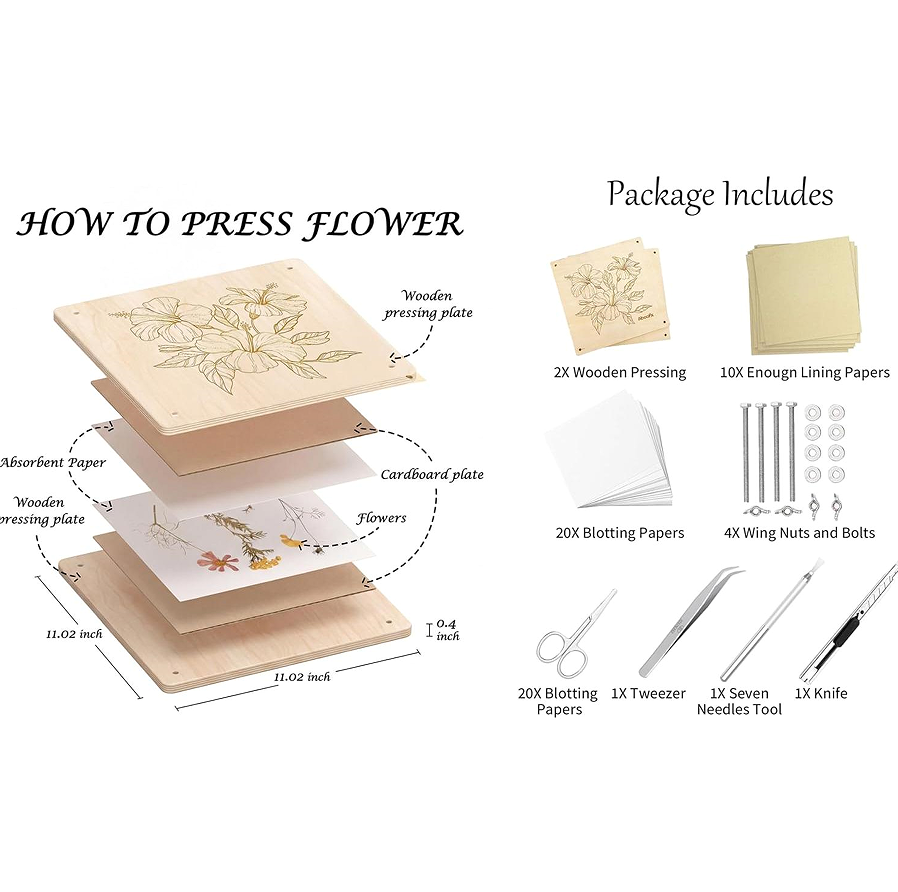


This extra large wooden flower press kit offers expanded dimensions of 35.6 cm by 28.0 cm, providing a generous pressing area for larger botanical specimens or bulk processing. The kit includes two solid oak boards (each 1.8 cm thick), four metal wing nuts, four threaded rods (20 cm length), eight cardboard corrugated sheets, and thirty blotting paper sheets. The large size accommodates whole flowers up to 30 cm in length, including long-stemmed roses, delphinium spires, and lily petals. The thirty blotting papers allow the user to change papers frequently without needing to purchase replacements immediately. The oak wood is chosen for its density and durability; it resists warping even under prolonged pressure from moist plant material. The user may press multiple layers — up to ten — depending on the thickness of the plants. Typical applications include pressing wedding bouquet flowers, garden harvests for resin art embedding, or creating pressed flower specimens for botanical reference. The press also serves as a tool for drying herbs for potpourri (non-culinary). The assembly process requires no tools beyond the included wing nuts. The blotting paper is unbleached and highly absorbent. The cardboard sheets have a fluted design to promote air circulation between layers. The product does not contain any flowers or plant material. This kit is suitable for both adults and children under supervision (ages 8+). The wing nuts and rods are galvanised steel; they may show minor surface rust if stored in humid conditions, but this does not affect function. The user should not use this press with microwave or oven heat. The drying time varies from 2 to 4 weeks. The product does not claim to preserve flower colour indefinitely; some fading is natural. The packaging is a plain corrugated box with a printed label. This press is also suitable for pressing leaves for classroom activities. No instructional booklet is included beyond a one-sheet diagram. The user accepts responsibility for monitoring for mould growth; if mould appears, discard affected blotting paper and wipe boards with diluted vinegar (allow to dry thoroughly before reuse).